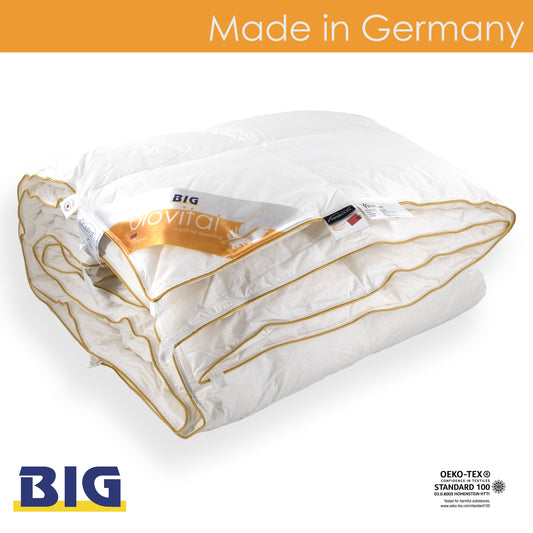

A suitable down duvet balances warmth, weight and comfort. Its performance does not depend only on whether the filling is labelled goose down or duck down. Compare down percentage, fill power, fill weight, size, shell fabric and duvet construction together.
The sections below explain what each technical specification means and how to use it when comparing down duvets.
1. What Is Down?
Down consists of three-dimensional clusters. Fine filaments extend from a central point and create lofted spaces that hold air. Unlike feathers, down clusters do not have firm quills, allowing them to provide softness, loft and insulation at a relatively low weight.
Feathers have quills and normally add more structure and weight. A duvet may contain both down and feathers, so the product page or care label should state their percentages. For example, a duvet containing 90% down and 10% feathers may differ in weight, loft, feel and price from one with a lower down percentage.
2. What Does Fill Power Measure?
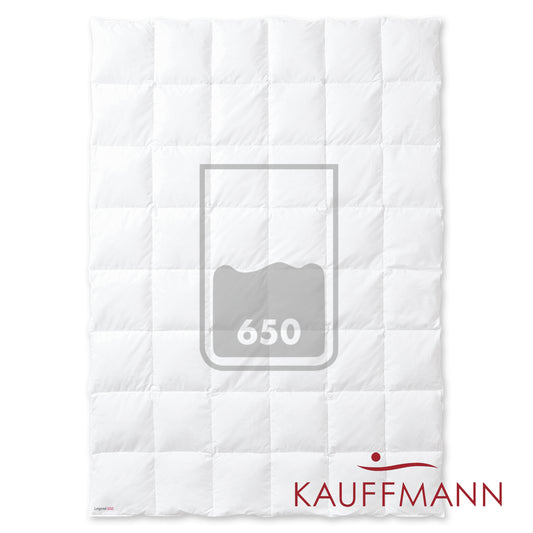
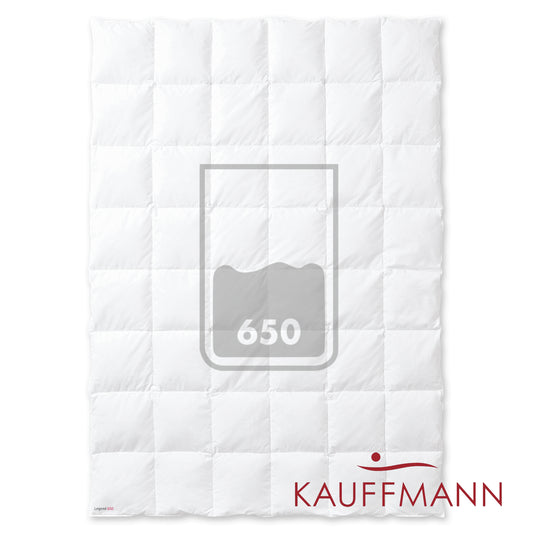
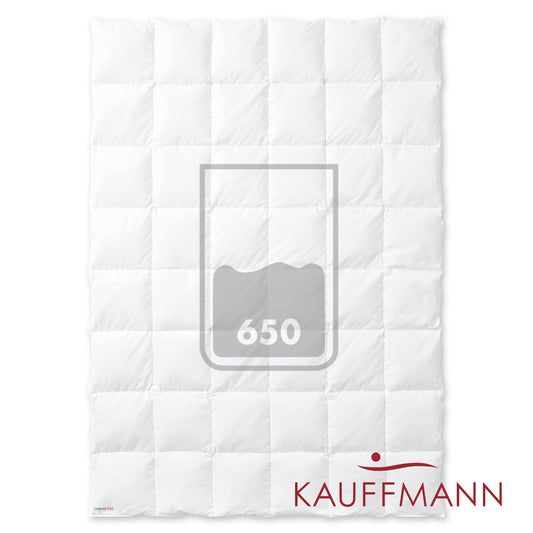
Fill power measures the volume occupied by a fixed weight of down after it expands. It is commonly expressed as the number of cubic inches occupied by one ounce of down under specified test conditions. A higher number means that the same weight of down creates a larger lofted volume.
For example, when the down weight is the same, 800-fill-power down will generally create more volume, hold more air and provide more efficient insulation than 500-fill-power down. To achieve a similar warmth requirement, higher-fill-power down may use less filling weight and allow the duvet to feel lighter.
Fill power alone cannot determine the warmth of a complete duvet. Total performance also depends on fill weight, size, down percentage, compartment construction and shell fabric. High-fill-power down can be used in summer, all-season and winter duvets; the season still depends on how much down is used and how the duvet is constructed.
Read the Down Fill Power and Fill Weight Guide for a detailed explanation of how the two specifications work together.
3. What Is the Difference Between Goose Down and Duck Down?
Both goose down and duck down consist of three-dimensional clusters, and both are available in different grades. Larger mature clusters can normally achieve higher fill power. High fill-power specifications are commonly found in premium goose-down products, which is why goose down is often selected for lightweight duvets with efficient insulation.
However, the words goose down do not prove that every goose-down duvet is warmer or more durable than every duck-down duvet. High-quality duck down can also provide good loft and insulation. Compare the actual down percentage, fill power, fill weight, odour treatment, cleaning standard, source and relevant certifications rather than relying only on the species name.
- For a lighter duvet: Compare products with higher fill power and a higher down percentage.
- For a particular budget: Duck down or a more moderate fill power can provide additional choices, but the actual specifications still matter.
- For traceability: Check the stated source, manufacturing origin and certifications instead of assuming quality from a country or species alone.
4. How Should You Compare Fill Weight?
Fill weight is the total amount of filling inside the duvet, normally stated in grams. Fill power describes how efficiently the down creates loft. Fill weight describes how much filling is used. Together, they influence the warmth and weight of the complete duvet.
When size, construction, down percentage and fill power are comparable, more fill weight will generally provide greater warmth, but the duvet may also feel heavier. Higher-fill-power down can create the required loft with less weight, which is why summer, all-season and winter duvets can all use high-fill-power down.
- Lightweight duvet: Uses less filling and may suit warmer rooms, air-conditioned bedrooms or people who tend to feel hot.
- All-season duvet: Uses a fill weight between typical summer and winter designs and may suit a wider range of room temperatures.
- Winter duvet: Normally uses more filling and may suit colder bedrooms or people who tend to feel cold.
Do not compare total grams across different sizes without context. A double or king-size duvet covers a larger area and may naturally contain more filling than a single duvet. Compare products of the same size and a similar construction.
5. What Do Shell Fabric and Thread Count Do?
The shell contains the fine down and feather filling and sits beneath the duvet cover. Its yarn, weave, density, weight and finishing affect feel, breathability, softness, sound and down-proof performance.
Thread count describes the density of warp and weft yarns and is one useful fabric specification. Fine yarns and a tightly woven construction can help produce a soft, down-proof shell, but a statement such as more than 250 threads—or any single number—cannot guarantee that no down will escape. Performance also depends on yarn quality, weave, finishing, stitching and seam construction.
Cotton is commonly used for duvet shells because it can provide a soft and breathable feel. Some high-fill-power duvets use particularly light, tightly woven shells to reduce shell weight and allow the down to expand efficiently.
6. Why Do Compartments and Stitching Matter?
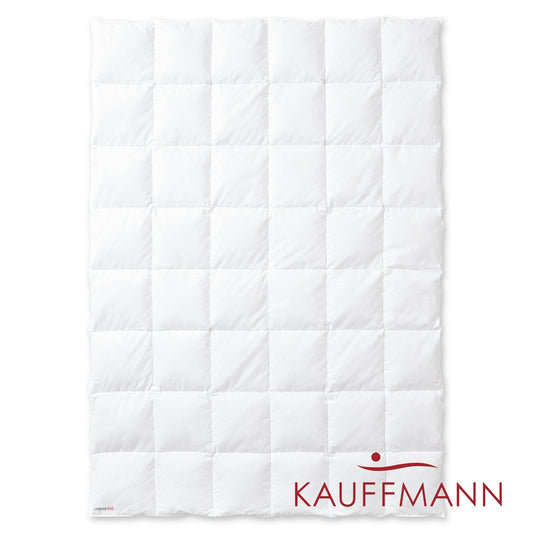
Down duvets are normally divided into compartments to limit filling movement and distribute the down more evenly. Compartment size, baffle construction and sewn-through stitching affect the available loft, cold spots, weight and how the duvet drapes around the sleeper.
No single construction is best for every season. A lightweight summer duvet and a winter duvet with more filling may use different compartment designs. Compare the construction together with fill weight, fill power and intended season.
7. Match the Duvet to Your Sleeping Preferences
- If you tend to feel hot: Compare summer duvets, lower fill weights or lighter shell fabrics.
- If you tend to feel cold: Compare all-season or winter duvets and check the fill weight for the same size.
- If you prefer a lightweight duvet: Compare higher fill power, higher down percentages and lighter shells.
- If you prefer more weight and a wrapped feeling: Compare fill weight and the total product weight.
- If you use air conditioning for long periods: Choose according to the actual bedroom temperature rather than Hong Kong's outdoor season alone.
8. How Should You Care for a Down Duvet?
Use a suitable duvet cover to reduce direct contact between the duvet and perspiration or stains. Gently redistribute the filling and allow the duvet to air in a dry environment to help it remain even and dry.
Always check the complete care label before cleaning. Different shell fabrics, sizes and constructions can have different requirements. Do not apply the cleaning instructions from another duvet or from the duvet cover. If using a professional cleaner, the service should also follow the product's care label.
Read the Down Duvet Washing, Drying and Storage Guide for information about drying, breathable storage and different cleaning methods.
Compare Down Duvets for Your Needs
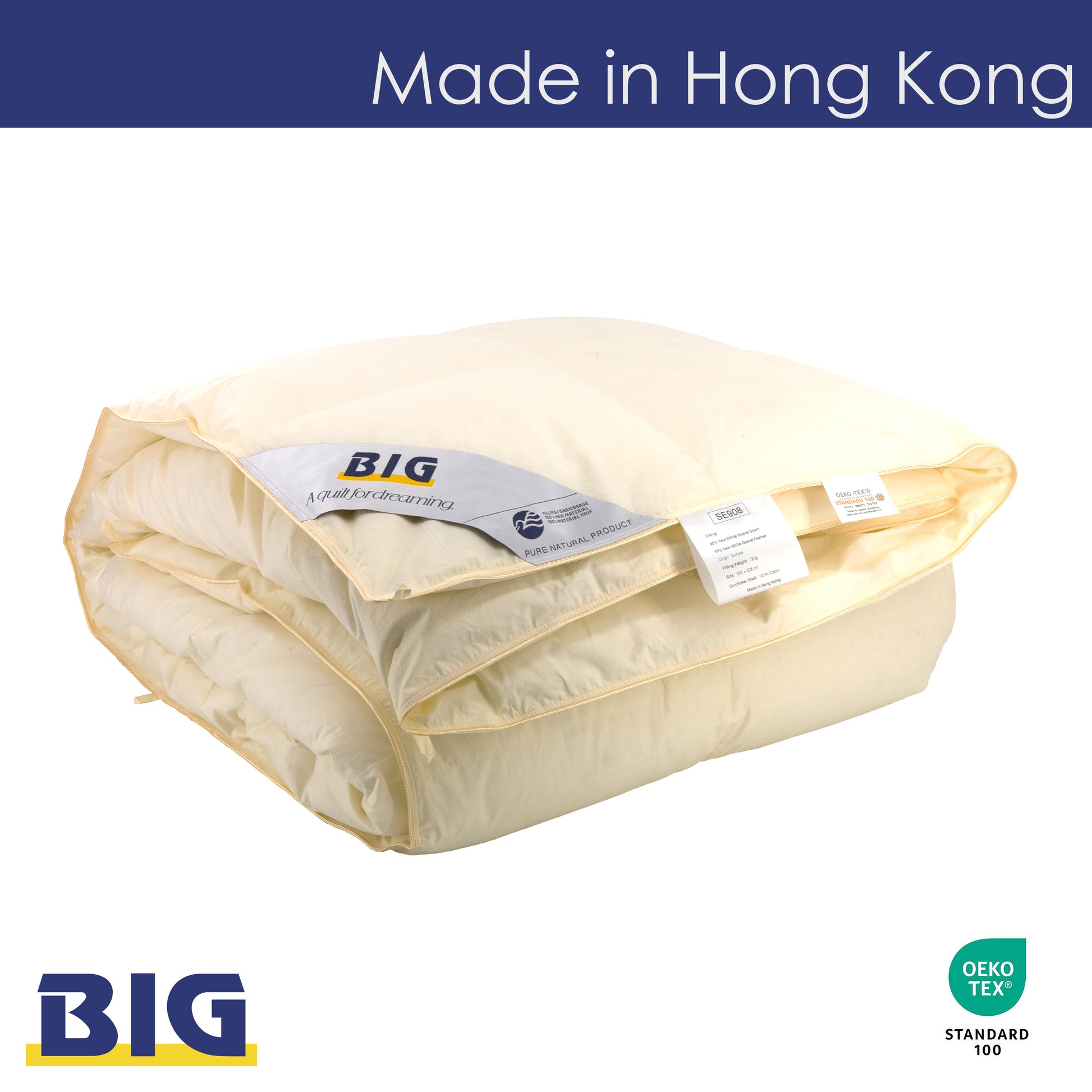
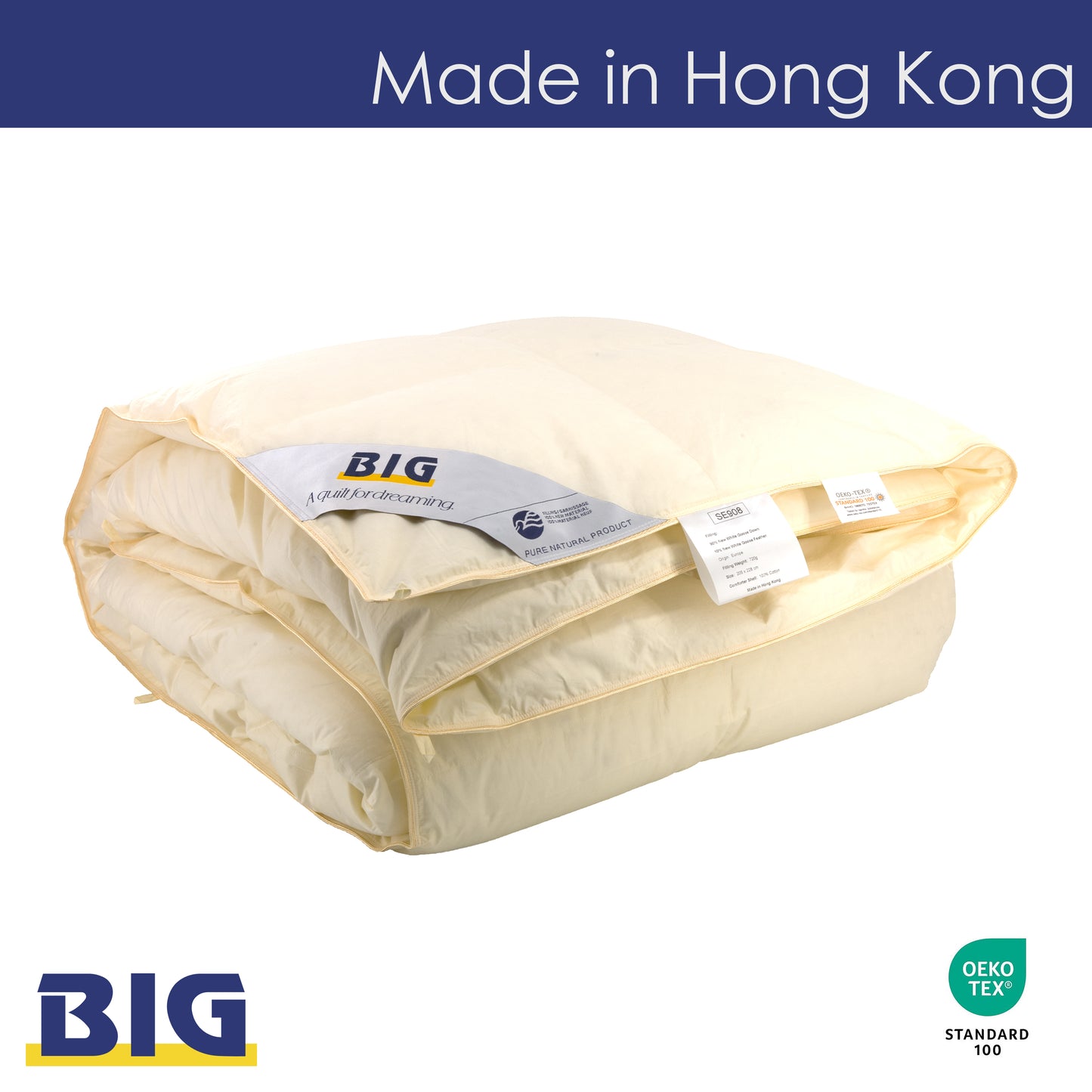
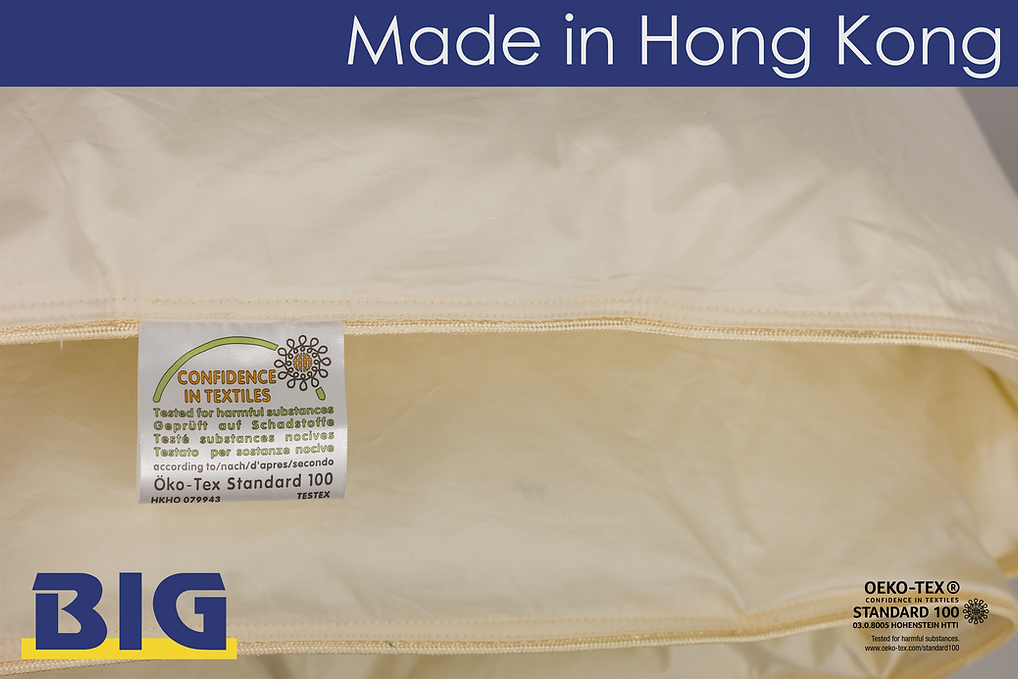
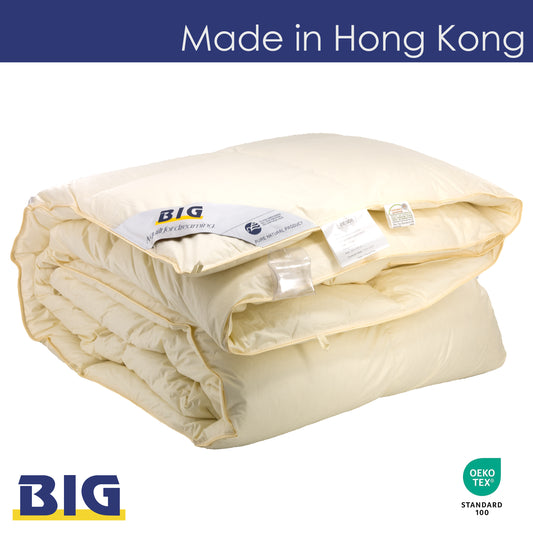
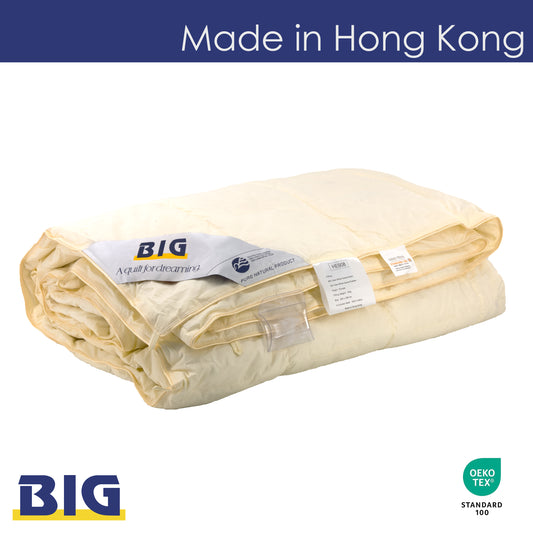
Explore the BIG Living down duvet collection and compare down percentage, fill power, fill weight, size, shell fabric, origin and manufacturing information across summer, all-season and winter designs. The products below provide a starting point for comparison; check each product page for its current specifications and availability.